
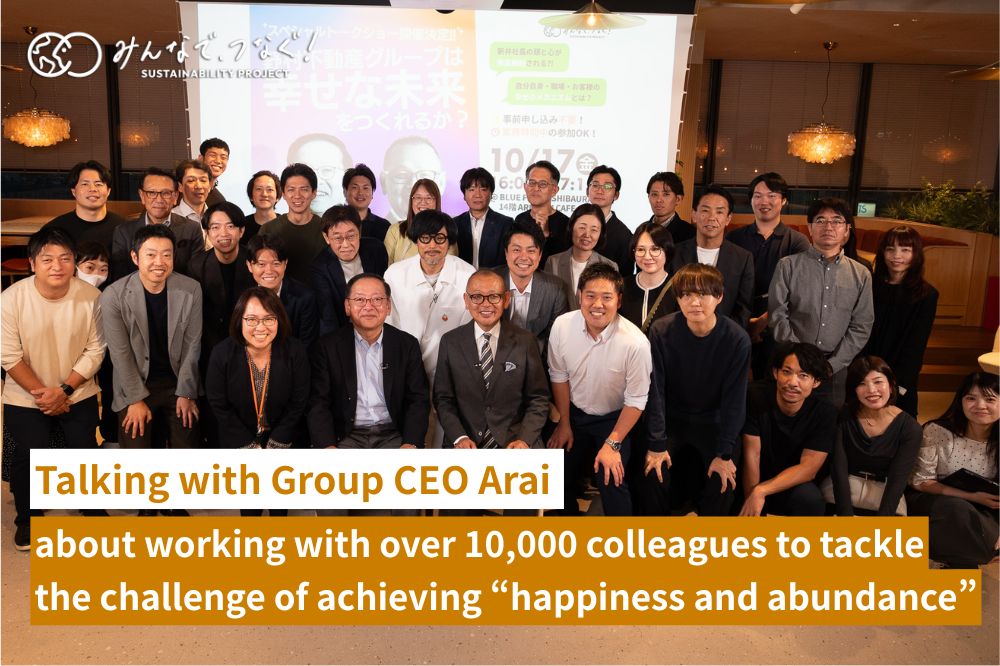
Talking with Group CEO Arai about working with over 10,000 colleagues to tackle the challenge of achieving “happiness and abundance”

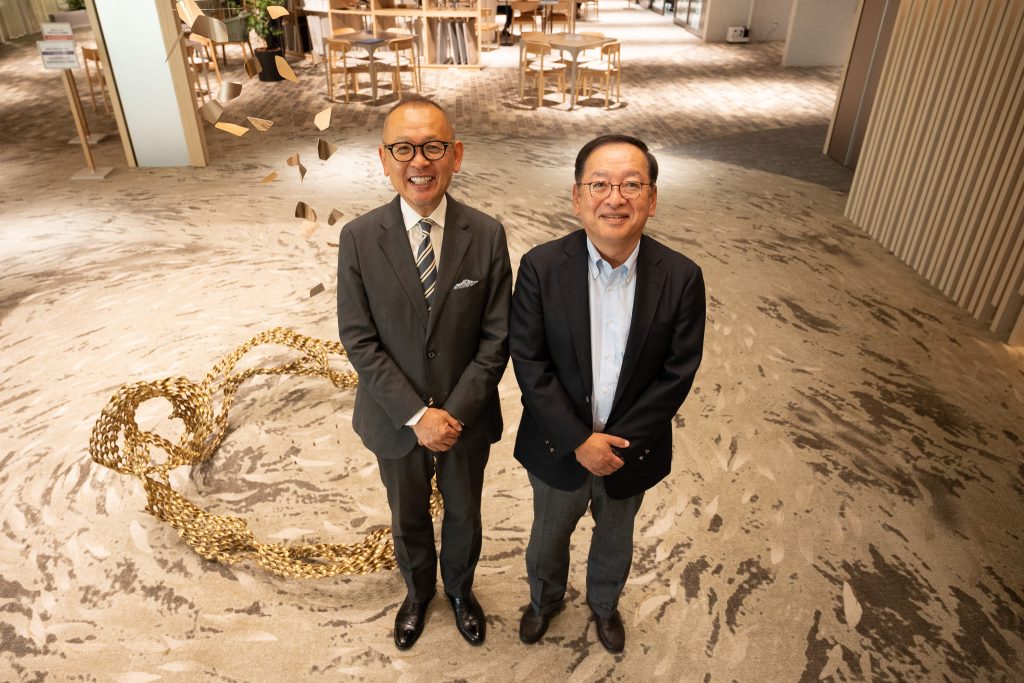
- Satoshi Arai
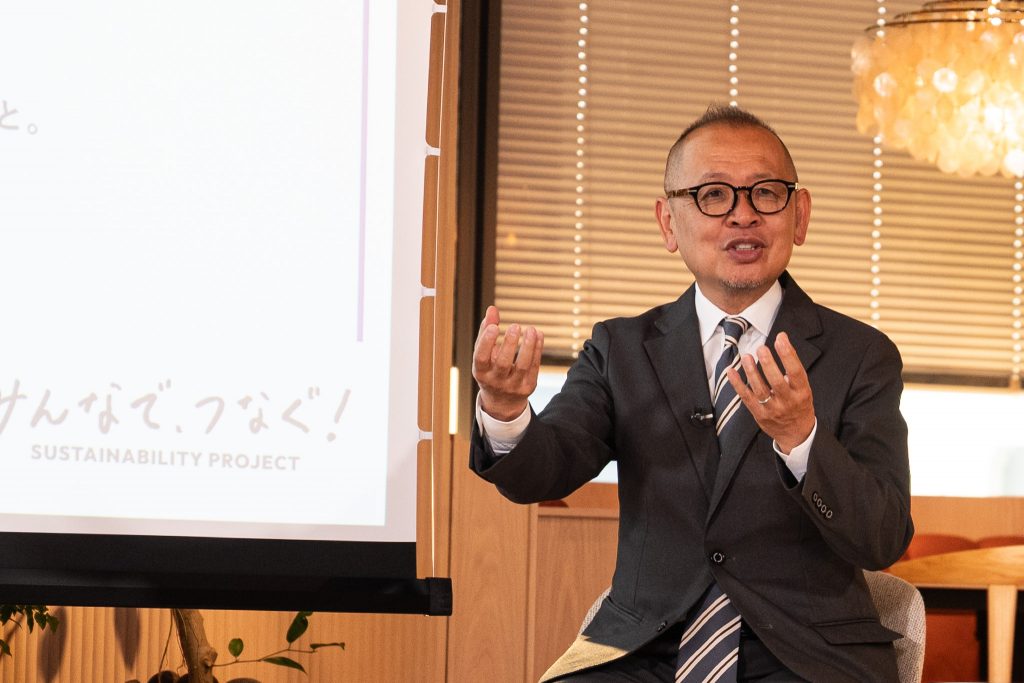
Joined Nomura Securities Co., Ltd. in 1988 after graduating from university, and he retired from the company in 2022 as Vice President in charge of the Sales Department. The same year he retired, he joined Nomura Real Estate Holdings, Inc. and has served as President and Group CEO, as well as chairman of the Sustainability Committee, since 2023. Originally from Aichi Prefecture, Arai was a member of the Kendo club during his student days. These days he enjoys a quiet drink most evenings and a round of golf three or four times a month.
- Takashi Maeno
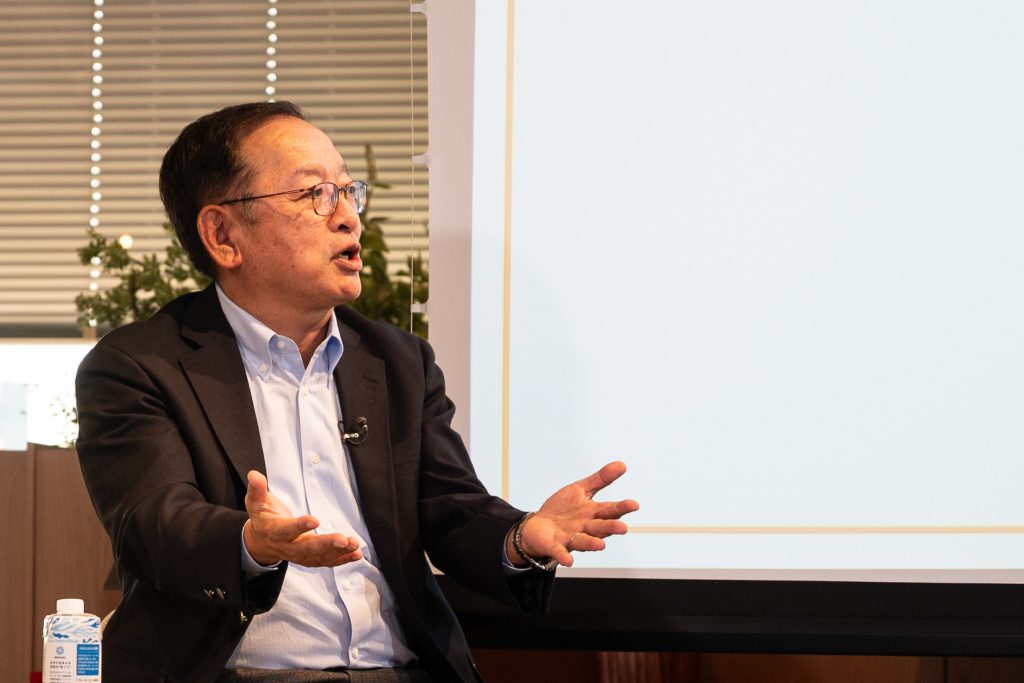
Dean of the Faculty of Well-Being at Musashino University and a professor emeritus at Keio University. After working as an engineer at Canon Inc., Maeno became a university professor. He researched robotics and AI before becoming a leading expert in the study of happiness (well-being). He has written many books, including The Mechanism of Happiness.
- Shinji Ohata (Moderator)
An expert in sustainability. Ohata’s aim is to foster social good in society to create new businesses and markets. He teaches classes in social innovation at Waseda Business School. He is the CEO of O ltd., a representative of Makaira Art & Design, a representative of THE SOCIAL GOOD ACADEMIA, and a producer of MAD SDGs.
In Part 1, we discussed how the Nomura Real Estate Group’s vision of “maximizing happiness and abundance” was born from a strong desire of Group CEO Arai to put into words what is in the hearts and minds of Group employees.
In Part 2, we look at specific ways that this vision can be incorporated into the daily operations that we perform as an organization. We learn that Group CEO Arai’s starting point as a manager is, essentially, to pursue business that provides happiness to those around us. We then talk about such topics as what we can do starting tomorrow, in an organization of over 10,000 people, to make the Group’s vision a reality.
How do you achieve happiness for an organization of over 10,000 people?
Ohata:Professor Maeno said that it is important to include “happiness” as part of the corporate philosophy, but are there any examples of companies that have actually implemented this into their management and succeeded?
Arai:There is a story in the professor’s book about a food manufacturer in Nagano Prefecture that really struck me. I have actually visited the company, and I thought how nice it must be for the employees in such a company when I see how happy they seem to be working there.
Maeno:That food manufacturer’s philosophy is focused on building a good company. And when asked what constitutes a “good company,” their response is one which makes both the employees and customers happy. In that sense, having “happiness” and similar concepts as part of the corporate vision helps make companies strong.
Ohata:I see. While there are such success stories, I imagine that, when it comes to realizing such a vision for an organization of over 10,000 people, there are other difficulties that arise.
Arai:That is something I would like to hear Professor Maeno’s thoughts on. There are around 8,000 people working together in our Group, around 12,000 when you include part-time workers. So, is there anything you can suggest from an organizational management perspective about what is needed to ensure everyone is happy in their work within an organization of that size?
Maeno:When comparing large and small- to medium-sized companies, the average level of happiness is higher in large companies. This is because larger companies have systems in place to eliminate negative factors, such as overwork and harassment. Thus, it isn’t the case that large companies are unhappy. However, when it comes to being extremely happy, this is often found among small- to medium-sized companies. The reason is that it is easier for the president to communicate with the employees.
For example, if the vision to “maximize happiness and abundance” reaches all employees, this will make for a happy company. And if, to achieve this, all the department heads echo the president in saying, “We want to maximize happiness and abundance,” then everyone is on the same page. Thus, in principle, if you have 100 organizations of 100 people each, this means the vision will reach 10,000 people.
“Maximizing” isn’t achieved by a few “supermen” but by an extra 5% from everyone
Ohata:I would like to talk a bit more about the word “maximize.” Does maximizing mean ensuring the average happiness level is at least somewhat higher? Or does it mean ensuring the maximum happiness level is higher? Or is there some balance between the two approaches?
Maeno:When considering happiness, naturally, if everyone is at the same level, then the average value will be higher. It would be bad if there was a disparate situation where many people are unhappy. That is why when we talk about “maximization,” it’s important to include the principle that this “maximization” applies to everyone rather than just making a few people extremely happy.
Arai:That’s right. No matter how hard you try, I don’t think it is possible to improve performance by 200% or 300%, even for the most outstanding employees. However, it should be possible for thousands of people who are happy in their work to increase their performance by 5% or 10%, and, as this spreads throughout the organization, you can expect tremendous added value to be created. That is what I want for our Group.
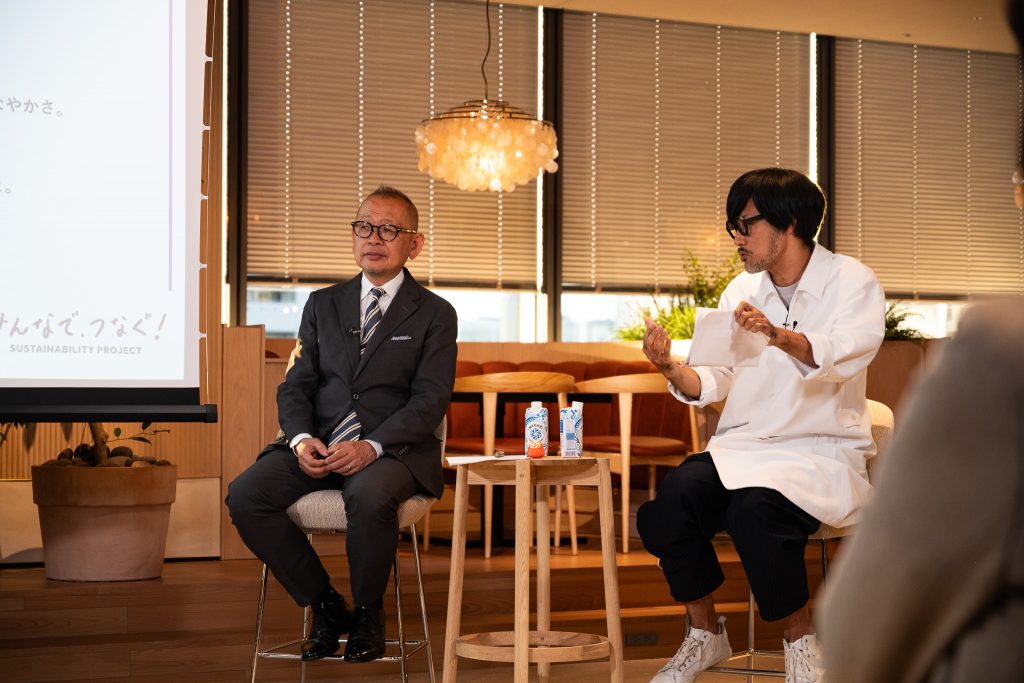
Can “happiness” be visualized?
Arai:As it says in Professor Maeno’s book, a sense of happiness leads to added value and increased productivity. However, while it is possible to measure added value and productivity, is it possible to measure happiness itself?
Maeno:My methodology, of course, is psychology. I give people a questionnaire and ask them to circle the response that immediately comes to mind, such as “Extremely happy,” “Very happy,” and “Somewhat happy.” Positing that people whose immediate response is to say that they are very happy are, in fact, very happy is something of a wild hypothesis in psychology. Naturally, there will be errors, but if you collect data from 10,000 people, visible trends emerge. Measuring individual happiness through questionnaires is not very accurate, but it is meaningful when you look at the average values for 100 people in a department and then compare them by department. Companies have begun to investigate engagement, which is the relationship between the company and the individual employee and whether they are mutually satisfied. This is a very good initiative. At the same time, if we are fundamentally addressing the issue of happiness, we might be able to have a more substantive discussion if we look at the overall happiness and well-being of the individual, including his or her relationship with the company.
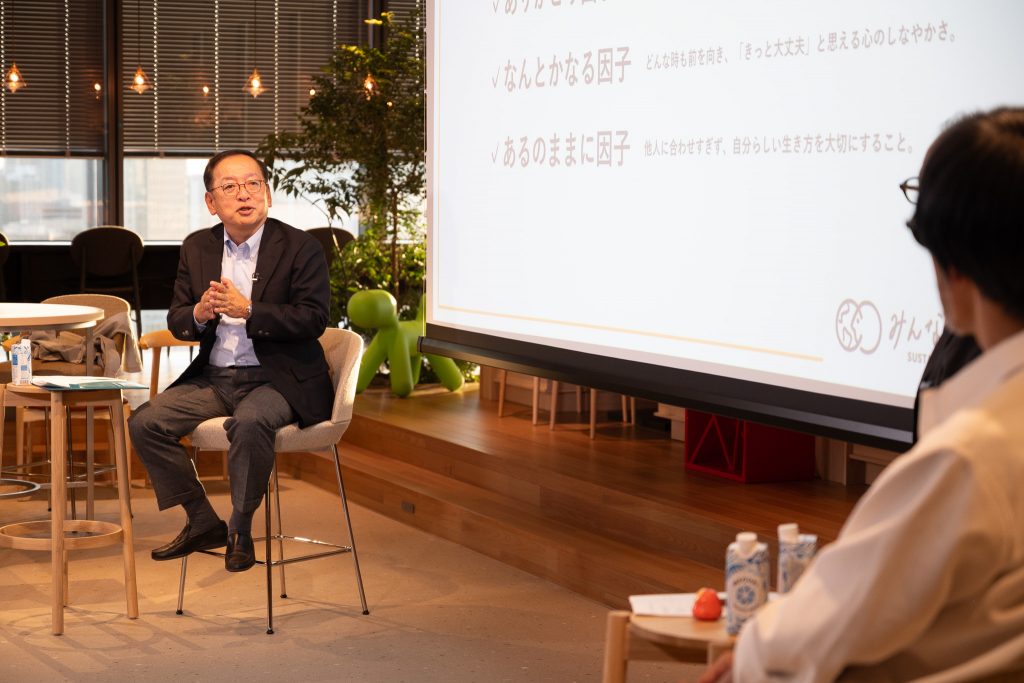
What you can do starting tomorrow - Using daily chats to find ideas for realizing the vision
Ohata:We have talked about organizational theory and visualization, but what can each of us do on a more personal level?
Araii:In recent years, I think people engage in less small talk. Even when I’m at work, I’m communicating with the person in front of me via email. The fact is, I think that by having small chats, we create something that resonates with other people. However, everyone is just staring at their computers and not talking. Ideally, you should be able to engage in regular, daily communication; otherwise, you will be unprepared if you suddenly have to have a one-on-one interview. To the many people who I’m sure are watching or reading this, I’d appreciate it if you could make a bit more conscious effort to “chat.”
Also, it just occurred to me, but I think it would be really interesting if we could have more opportunities like today, or even, perhaps over drinks after work away from the serious faces we wear in the department, to discuss things, like what makes us happy or how we can be happy, that we would otherwise be too embarrassed to chat about.
Being a Japanese company, we can take the lead globally in tackling this challenge
Ohata:What does the challenge of making large companies happy, which you mentioned earlier, mean for Japanese companies?
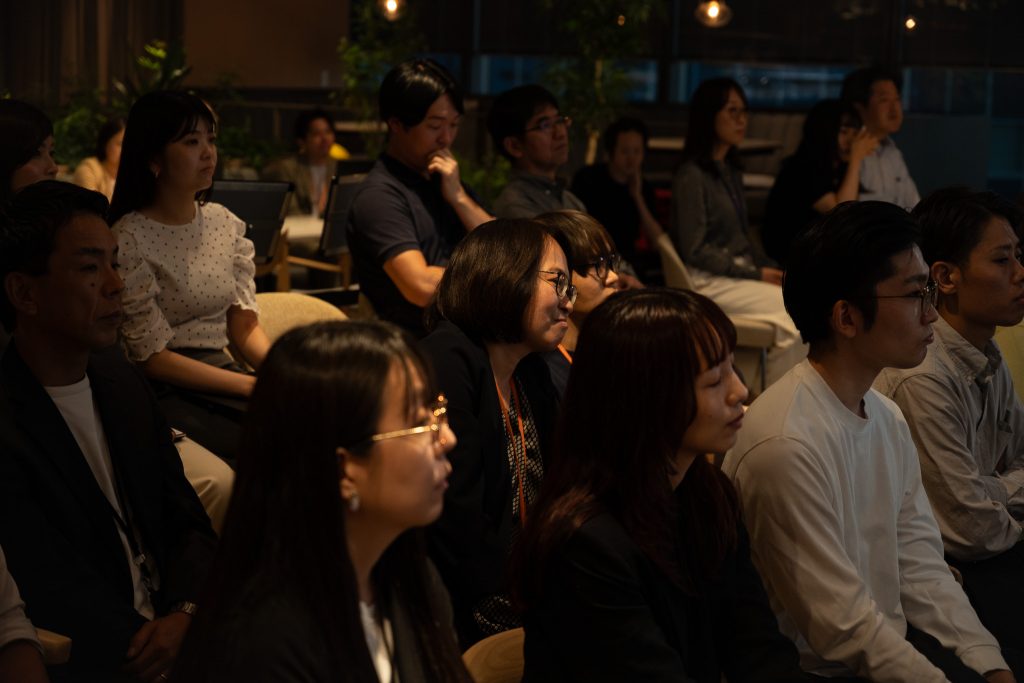
Maeno:On a genetic level, 80% of Japanese people, in fact, have the “worry gene,” which makes it hard for them to take on challenges. This is much higher than in Westerners. This may have something to do with Japan’s history as an agricultural society where security is emphasized.
However, Japanese people have a propensity for being detail-oriented. This allows them to tenaciously solve complex problems that overseas companies struggle with. That is why I think Japan will be the first to solve the complex problem of making large companies happy.
Arai:I certainly hope you are right. I want to be happier tomorrow than I am today, and I want next year to be better than this year. Thus, I will take action to increase my own happiness. I want us all to realize that such like-minded people are all around us in our Group, and I want us all to work to achieve even greater happiness together.
Ohata:Mr. Arai and Mr. Maeno, thank you very much for your time today. You have helped me to see that the big vision of “maximizing happiness and abundance” actually comes down to the concrete action of chatting with others that each of us can start taking tomorrow. This has been a very thought-provoking discussion.
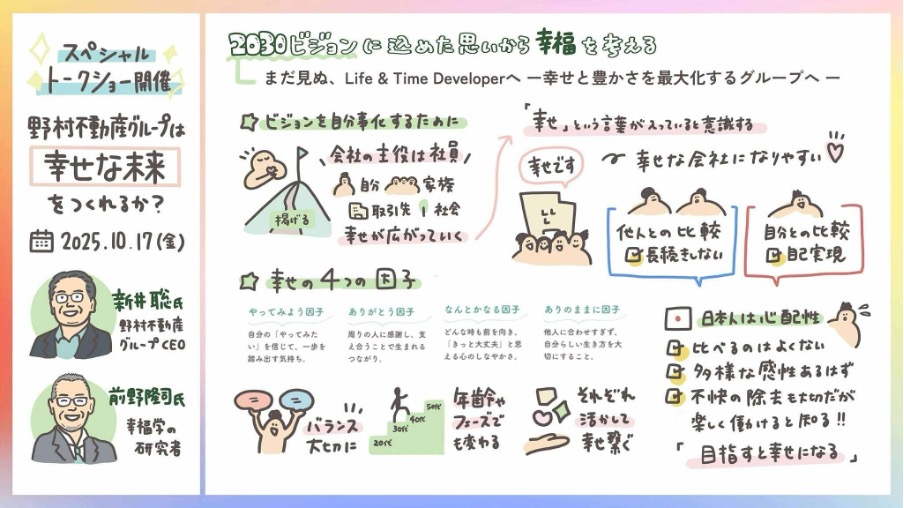
The vision of “maximizing happiness and abundance” may seem like a grandiose theme, but ideas for how we can achieve it may be hidden in unexpected places; all it takes is adding a new perspective in your daily work.
This event received a great response, with around 60 people attending in-person and another roughly 250 people participating online. The survey conducted following the event also garnered a great deal of enthusiastic feedback from participants.
“This was a very interesting discussion. It helped me to realize that thinking about whether the people connected with the work I am responsible for are happy can lead to better business as well as service innovations.”
“Especially in this modern age of AI-driven optimization, I think it is incumbent upon us to engage with individuals and their stories that cannot be reduced to numbers.”
“Given the differences in thinking between departments, headquarters, and the company as a whole regarding happiness and how to approach work, the need for communication, including small talk, resonated with me. I’m going to strike up a chat tomorrow!”
First things first, use this article as an opportunity to have a little chat with your colleague sitting next to you. Or maybe have a team discussion about “our happiness.” These small steps may help you begin your journey toward “maximizing happiness and abundance” for both yourself and the entire Group.