
CEO Arai discusses “Maximizing Happiness and Abundance.” What happiness studies show for how to achieve it.
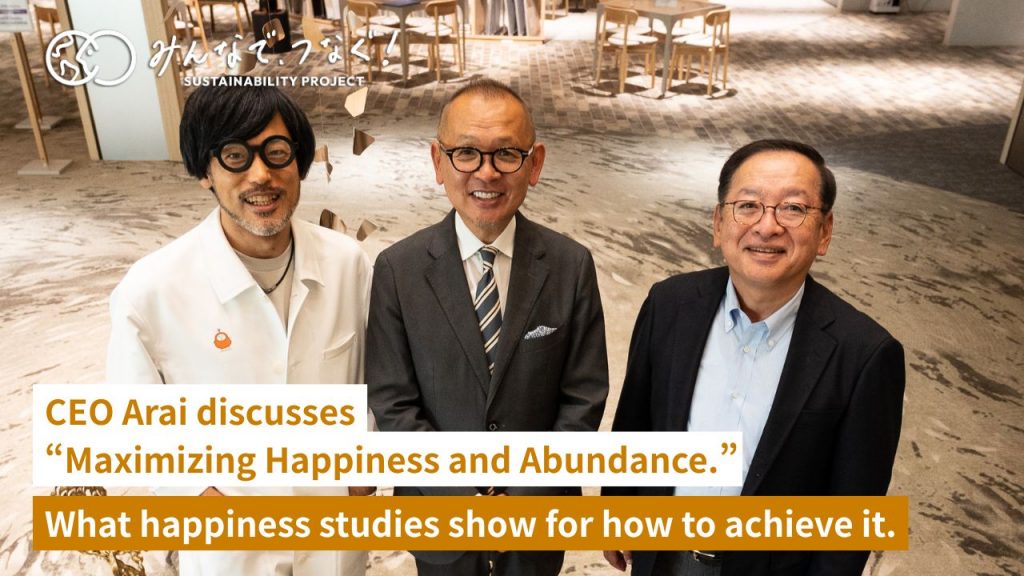

- Satoshi Arai
Joined Nomura Securities Co., Ltd. in 1988 after graduating from university, and he retired from the company in 2022 as Vice President in charge of the Sales Department. The same year he retired, he joined Nomura Real Estate Holdings, Inc. and has served as President and Group CEO, as well as chairman of the Sustainability Committee, since 2023. Originally from Aichi Prefecture, Arai was a member of the Kendo club during his student days. These days he enjoys a quiet drink most evenings and a round of golf three or four times a month.
- Takashi Maeno
Dean of the Faculty of Well-Being at Musashino University and a professor emeritus at Keio University. After working as an engineer at Canon Inc., Maeno became a university professor. He researched robotics and AI before becoming a leading expert in the study of happiness (well-being). He has written many books, including The Mechanism of Happiness.
- Shinji Ohata(Moderator)
An expert in sustainability. Ohata’s aim is to foster social good in society to create new businesses and markets. He teaches classes in social innovation at Waseda Business School. He is the CEO of O ltd., a representative of Makaira Art & Design, a representative of THE SOCIAL GOOD ACADEMIA, and a producer of MAD SDGs.
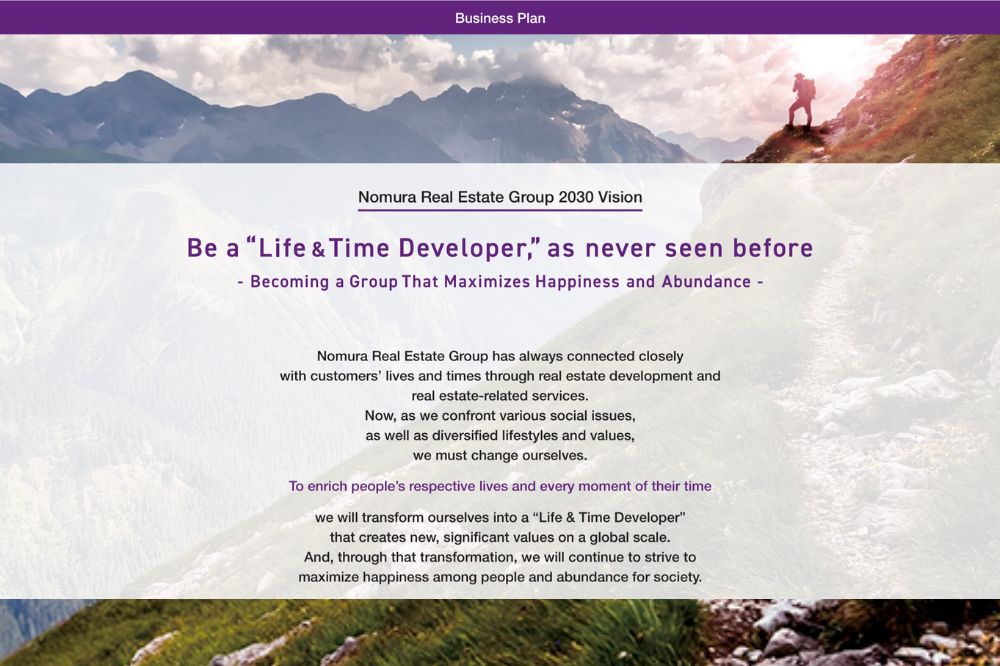
In April 2025, the Nomura Real Estate Group formulated a new business plan and announced its 2030 Vision: “Be a ‘Life & Time Developer’ as never seen before – Becoming a Group that Maximizes Happiness and Abundance –”. The addition of “maximizing happiness and abundance” as a goal brings with it a host of thoughts and ideas, and this goal and its significance are gradually being communicated throughout the Group through activities such as vision training for general managers. However, there are likely many who feel that the vision is too grandiose and they don't quite grasp how it relates to their own work, or that they would like to know more about the true intentions of top management.
Thus, to delve deeper, a special dialogue was recently held at BLUE FRONT SHIBAURA (BFS), which the Nomura Real Estate Holdings’ head office moved to in August, between Group CEO Arai, who set forth the vision, and Professor Takashi Maeno, a leading researcher in happiness studies. Many employees attended this public recording as well as watched it streamed online. The focus of the event was to encourage employees, as individuals, to be personally invested in this vision for “maximizing happiness and abundance” and to work as a Group toward realizing it.
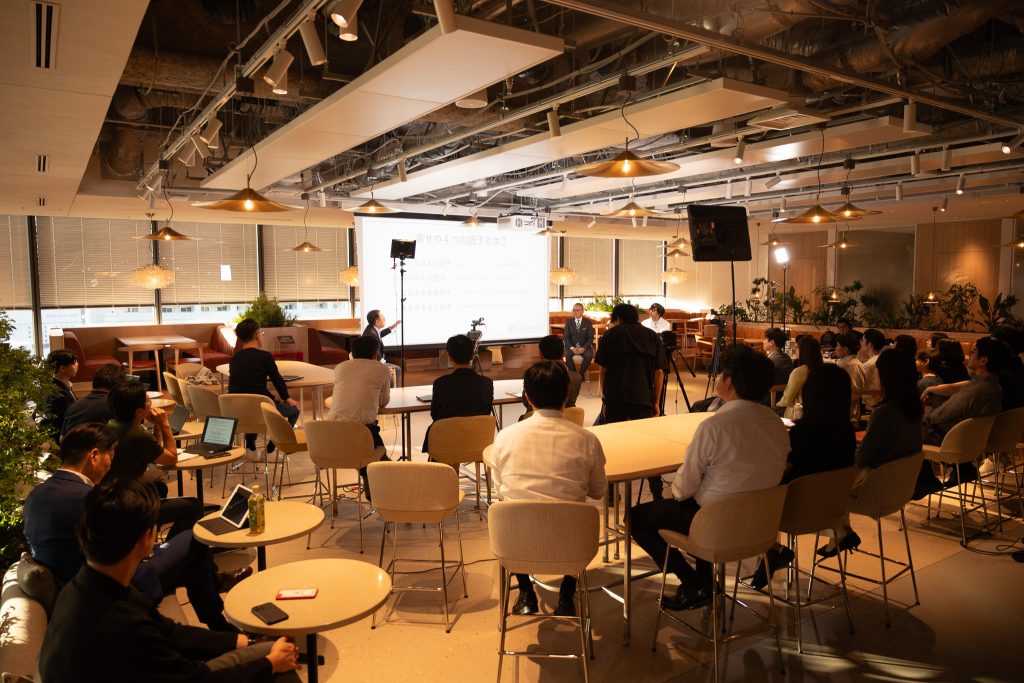
Here, we will present the conversation in two parts, looking at everything from the thoughts and ideas incorporated into the vision by Group CEO Arai to how they can be applied to corporate management. In the first part, we will delve deeper into the thoughts and ideas that Group CEO Arai has put into this vision. While also discussing the framework of the “four factors of happiness” proposed by Professor Maeno, we will explore tips for “happiness” and “personal investment,” which may at first glance seem like grandiose themes.
Why “happiness and abundance” now? It all starts with “personal investment.”
Ohata:Thank you for joining us today. First things first, in your new Mid- to Long-term Business Plan, “Becoming a Group that Maximizes Happiness and Abundance” has been added to “Be a ‘Life & Time Developer’ as never seen before.” Could you tell us about the thinking behind, and background to, these words?
Arai:Sure. I think the vision to “Be a ‘Life & Time Developer’ as never seen before” is a great one. However, for the employees, who are the ones primarily responsible for driving the company forward, what it is that a company that is a “‘Life & Time Developer’ as never seen before” does may be difficult to grasp. I felt that it would be difficult for them to have a sense of personal investment in this.
Ohata:I see. It seems “personal investment” is a keyword in this.
Arai:It all begins with the motivation that each and every employee has to be happy themselves, to make his or her customers happy, and to enrich society. Thus, in order to make them feel personally invested in the vision, it needs to put this personal motivation into words, otherwise it won’t resonate with them. When we thought about how to put this into words, we came up with the phrase “a group that maximizes happiness and abundance.”
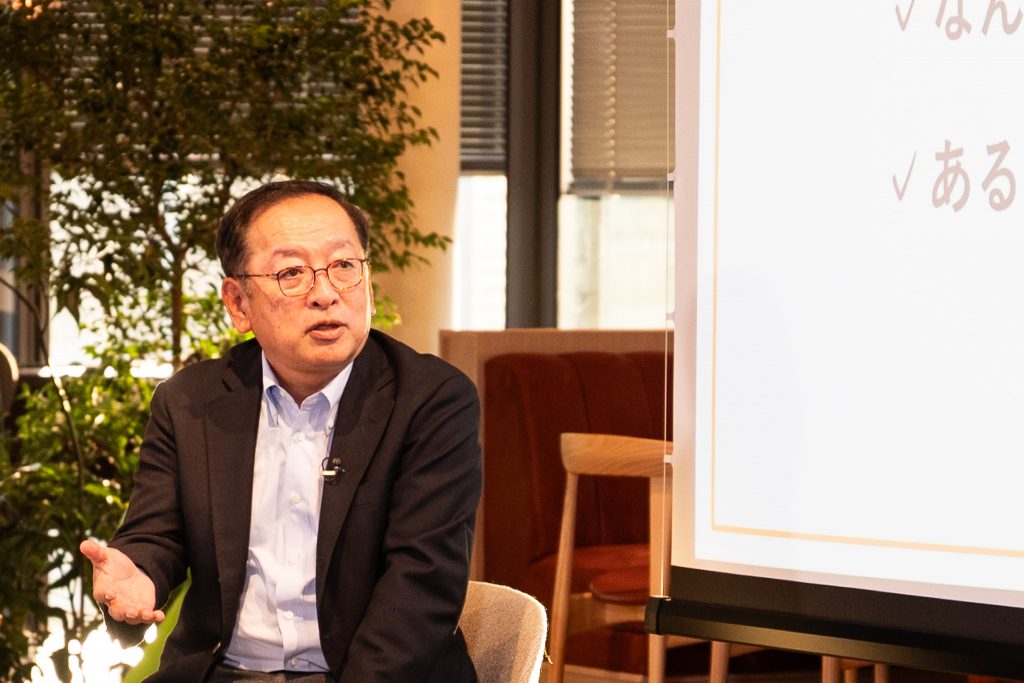
Ohata:Rather than it being a new idea from the CEO, it was more like the company put into words what was in the minds of its employees.
Arai:I wanted to express what you all have in mind and what you are aiming for, so that each and every one of you can feel personally invested in our vision.
What “maximization” means: Happiness begins with you
Ohata:I’d like to dig a little deeper; what is the scope and what customers do you envision for “maximizing happiness and abundance?”
Arai:Personally, I’ve never quite reached the point of trying to make others happy at the expense of myself. First, I want to be happy, and I want to make my family happy as well. If I have a customer in front of me, I want to make him or her happy and, beyond that, my business partners too. This is the expanding scope for my efforts to provide happiness. If we can expand the scope for providing happiness, this will also likely enrich society as a whole. And if we can do this as a group of people working together, that group will be sustainable. I use the word “maximize” in the sense that the “happiness” and “abundance” we are speaking of here will gradually spread. Ohata:Professor Maeno, as a specialist in this area, what effect do you think a company including the word “happiness” as part of its philosophy will have?
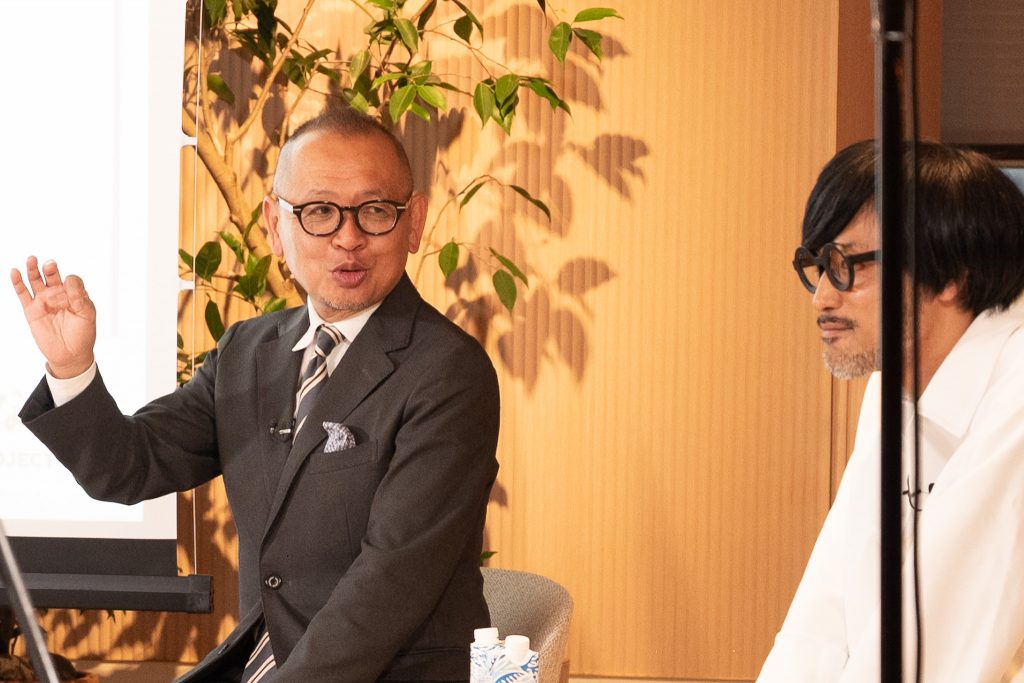
Professor Maeno:I think it’s terrific. I have examined a lot of different companies, and I have found that the ones that have the word “happiness” as part of their company philosophy are the ones that actually become happier. This is because it is a declaration that they seek to make their employees and society happy. By making it part of the philosophy, everyone becomes conscious of it. I'm really looking forward to seeing what will happen at Nomura.
Four tips for finding “happiness” and “abundance”
Ohata:Some may find the words “happiness” and “abundance” very grandiose and difficult to grasp. Professor Maeno, as your specialization is happiness studies, how do we break down and think about “happiness” in the first place?
Maeno:There are many factors that contribute to happiness, but when we use statistical methods to summarize them, they actually boil down to four.
These are “Let’s try it (self-realization and growth),” “Thank you (connection and gratitude),” “It will turn out alright! (positive and optimistic)” and “Be yourself (independence and ‘my pace’).”
The “Four Factors of Happiness.” Our happiness is made up of these four elements.
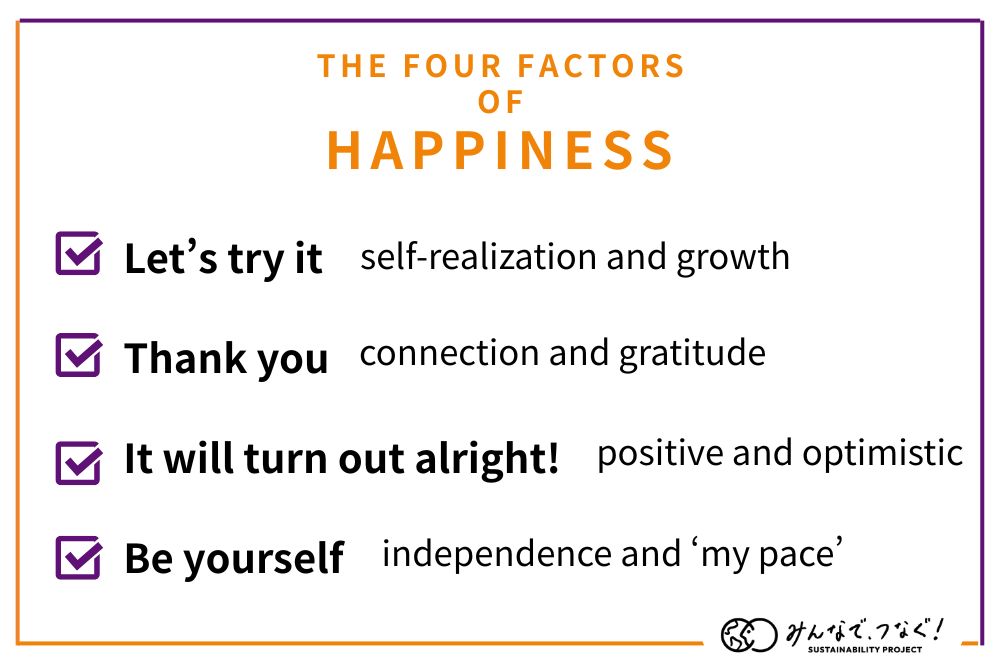
Maeno: Analysis has shown that people who have a good balance of these four factors are happy. The first two, “Let’s try it” and “Thank you,” are particularly important. Without these two, people are likely to fall into an unhappy state.
What are the “happiness factors” that make up Group CEO Arai?
Ohata:Now that Professor Maeno has explained the four factors, I would like him to ask questions in order to delve deeper into Mr. Arai’s own thinking.
Maeno:Let’s start with the “Let’s try it” factor. President Arai, when do you feel your work is rewarding?
Arai:I’m the type of person who gets bored easily. I’ve been aware of that about myself since I was young. I’m very curious, so I find it rewarding to learn new things, to become proficient in them, and then to use them to achieve something. Learning new things each day in the course of my job, and then putting them to good use, makes me extremely happy.
Maeno:I see. Just from what you’ve said, it’s clear that you meet the conditions for happiness. Tackling new challenges out of a sense of curiosity is the "It will turn out alright!” factor, and then using this to grow as a person and develop your individuality strengthens the "Be yourself" factor. Your response to this question gives me the sense that you live your life in a way which fulfills these three factors in a balanced way. This, then, makes me curious about the second factor, the "Thank you” factor. When do you feel a genuine desire to contribute to others?
Arai:First of all, I make a conscious effort to smile on a regular basis. I think it makes the people around me feel more comfortable. I try to create an atmosphere or environment where my smiling leads to the people around me smiling as well.
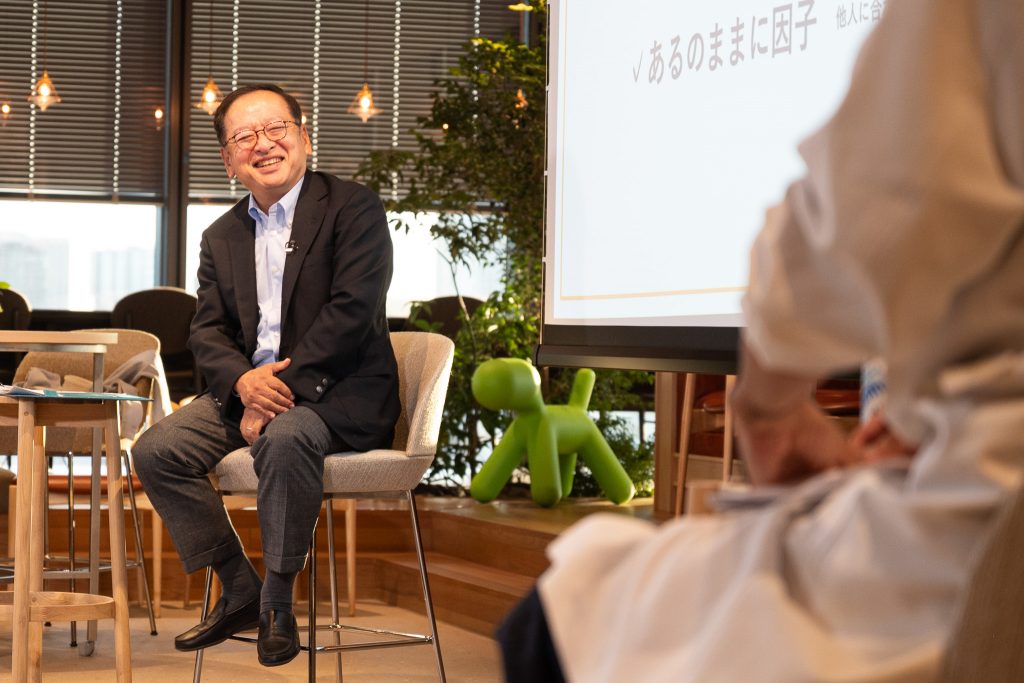
I also value having a spirit of gratitude for everything. We are where we are today not only because of our colleagues, but also because of the customers and business partners who support us. Maintaining this feeling of gratitude has been my guiding principle ever since I served as a branch manager in my 40s. At the time, everyone in my department lived by three mottos: “Know your customers,” “Make your customers happy,” and “Be grateful to your customers.” I still value these three mottos to this day. Ohata:Thank you, Group CEO Arai and Professor Maeno. If employees can use the factors of happiness in this way to verbalize their own happiness, it could foster communication about how to incorporate them into their work and identify what it is that motivates them.
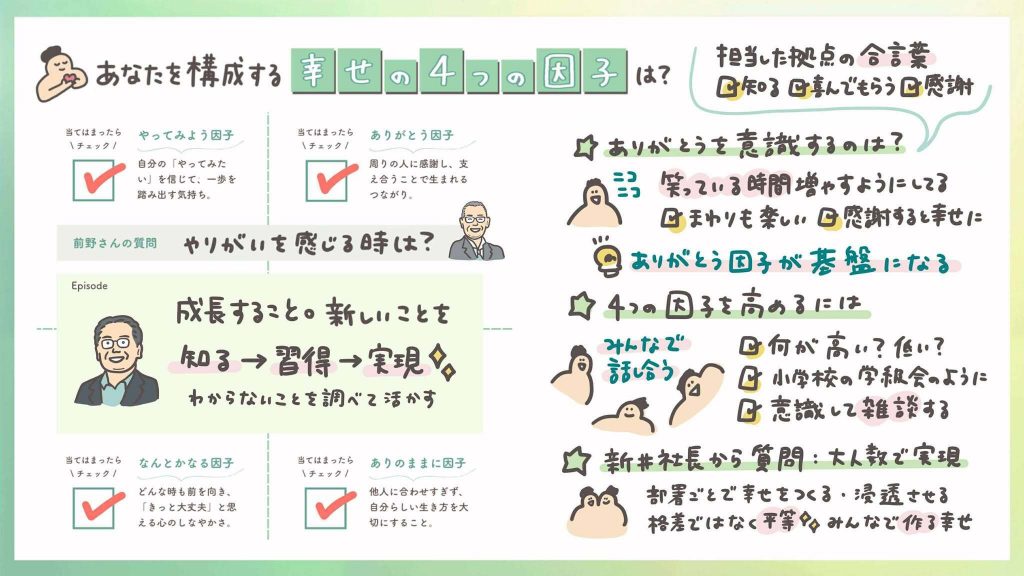
In this first part, we looked at why Group CEO Arai chose the phrase “maximizing happiness and abundance” for the Nomura Real Estate Group vision and explored his underlying motivation to “put into words what was in the minds of [the Group’s] employees.” In addition, Professor Maeno’s explanation of the “four factors of happiness” offered a glimpse into Group CEO Arai’s own thoughts on happiness.
In the second part, we will look at how this vision can be applied to management to motivate an organization of over 10,000 people. We will delve deeper into the specific challenges and future prospects from Group CEO Arai’s perspective as a manager.